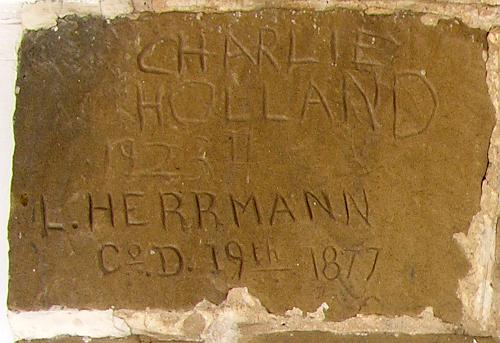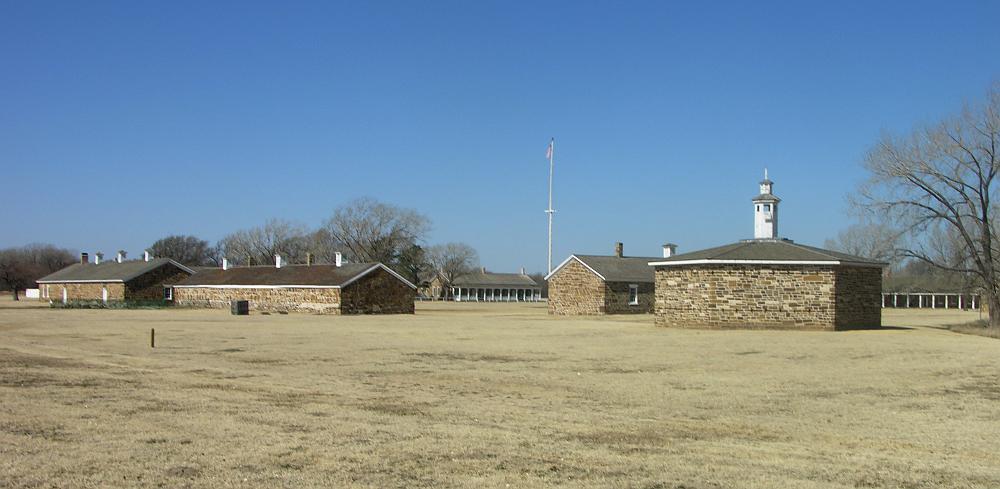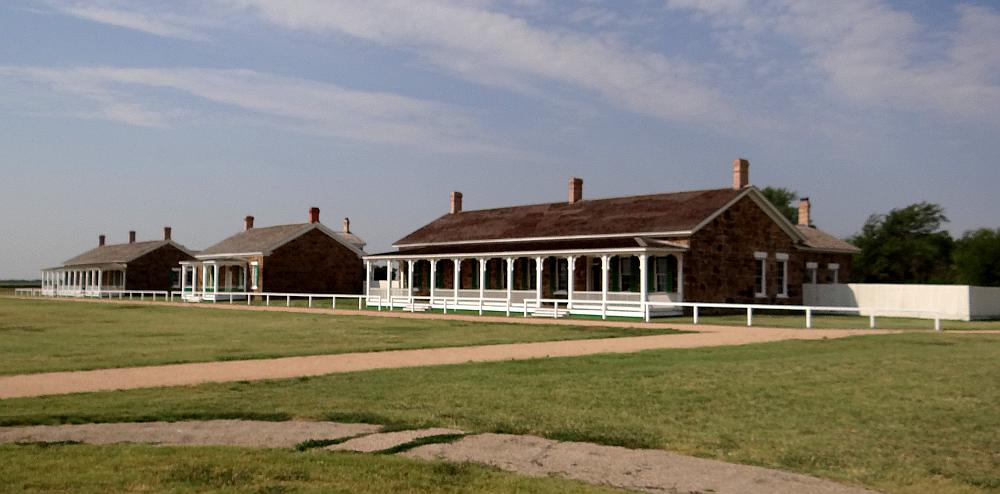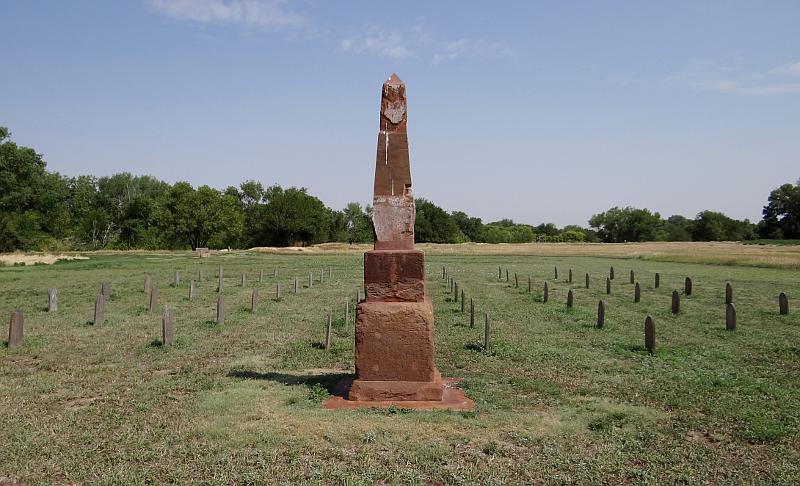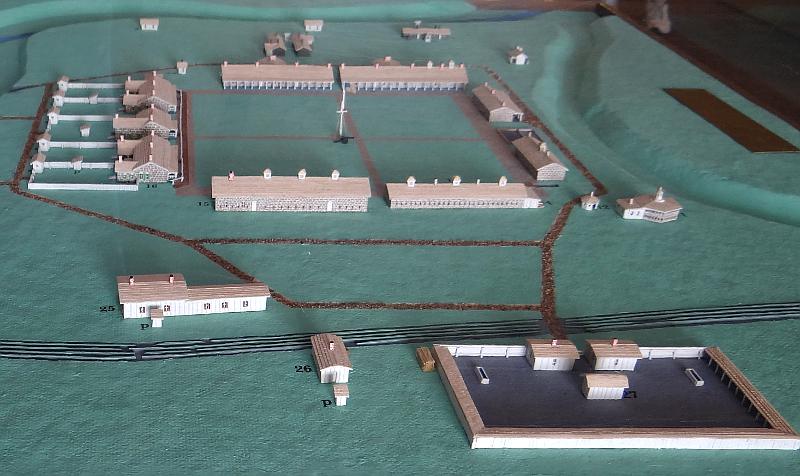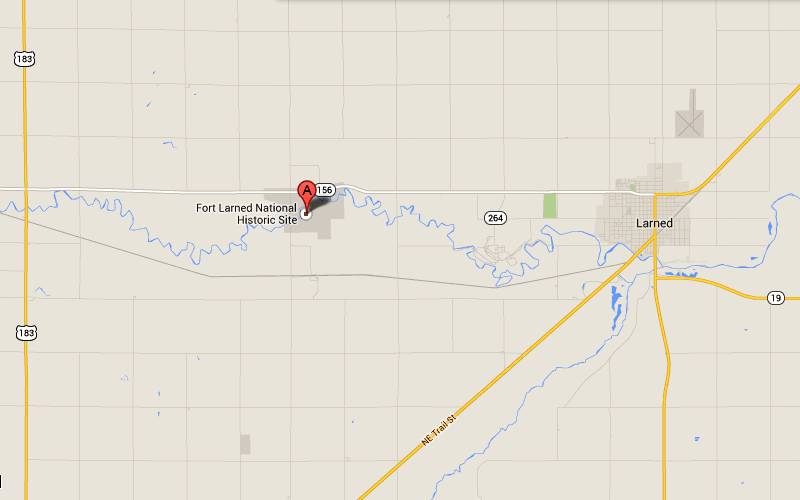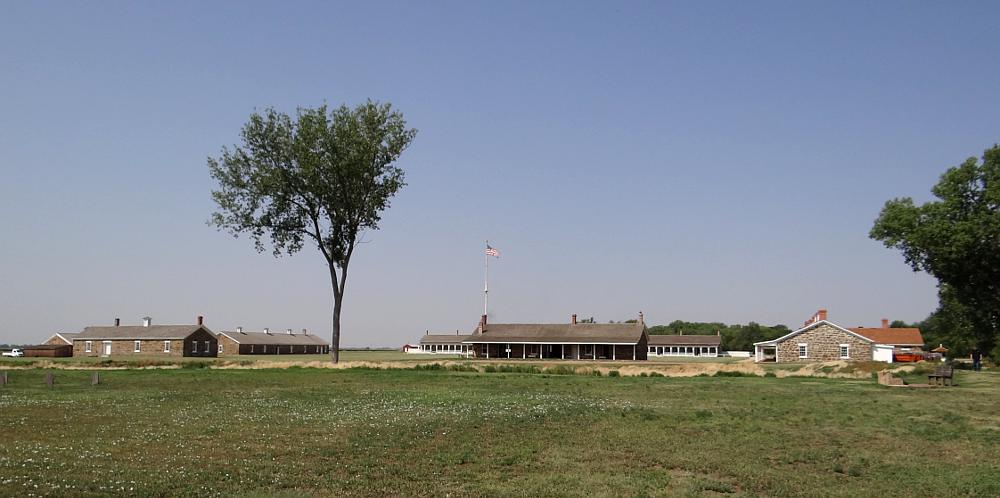
Fort Larned consists of 9 restored and 1 reconstructed building On October 22, 1859 Camp Alert was established on the Pawnee River to provide protection and escort service along the Santa Fe Trail. The following year it was moved further west. The new more durable sod and adobe fort was named for Colonel Benjamin F. Larned, who was the current Paymaster General for the United States Army. The sod walls were replaced over the next few years with locally quarried limestone Fort Larned was a key post in the Indian wars from 1859 to 1869, but it also served as an agency of the Indian Bureau in its attempts to provide peaceful solutions to the cultural conflict between the native americans and the whites. In the 1870 the railroad pushed west through central Kansas and soldiers from Fort Larned provided protection for the construction workers. But as the railroad advanced, the Santa Fe Trail had less and less traffic and in July of 1878 the fort was abandoned except for a small guard force left to protect the property. On March 26, 1883, the Fort Larned military reservation was transferred from the War Department tot he General Land Office, U.S. Department of the Interior. A year later the buildings and land were sold at public auction. For the next 80 years the property was privately owned.
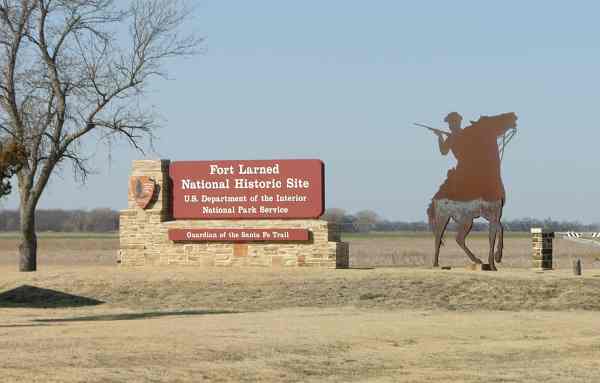
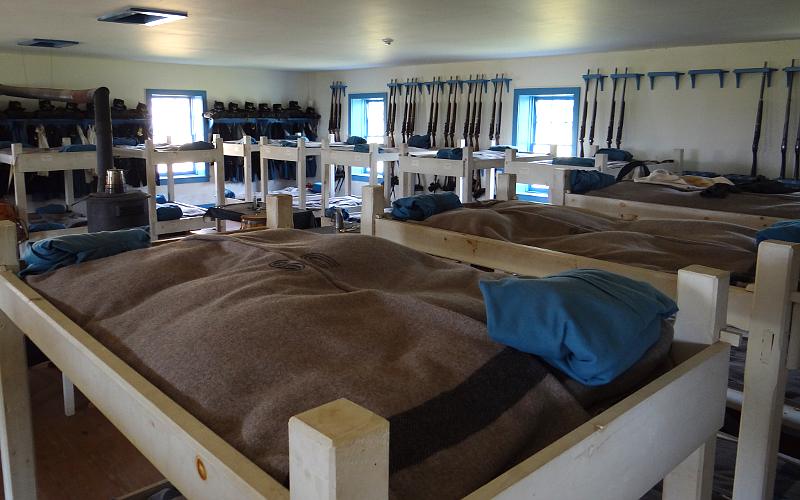
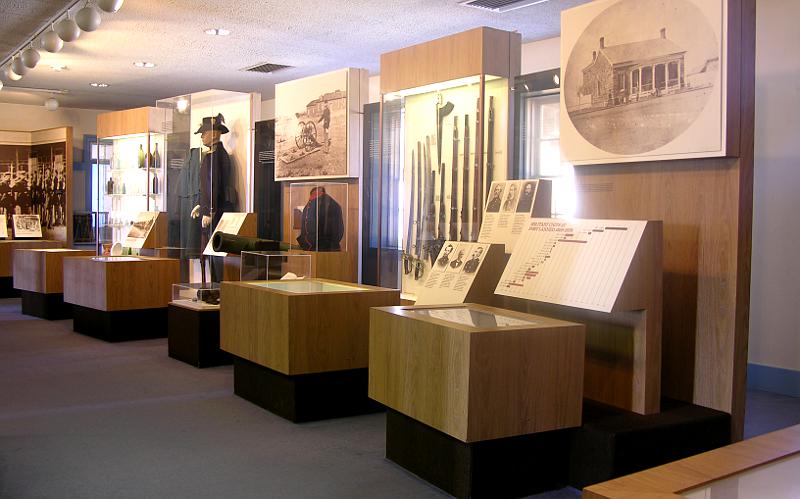
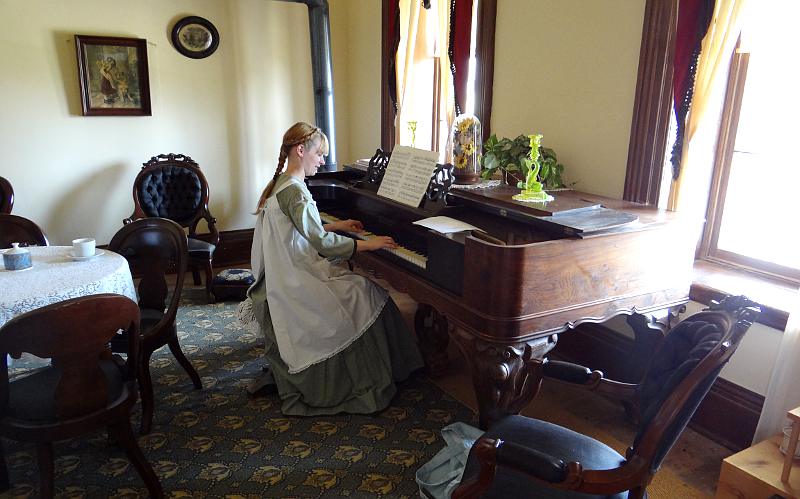
In August of 1964, Fort Larned became Fort Larned National Historic Site and a unit of the National Park System. The original buildings were extensively restored and one was turned into a museum and gift shop. The oldest building, the blockhouse (which had been torn down years ago) was rebuilt - in part with stones from the original building. Fort Larned National Historic Site is really a nice attraction and it deserves more attention. The first time that I photographed the fort, I was the only visitor to this lovely site. Free guided tours of Fort Larned are available with advance reservations by calling Call 620-285-6911.
Fort Larned National
Historic Site web site
copyright 2006-2026 by Keith Stokes |